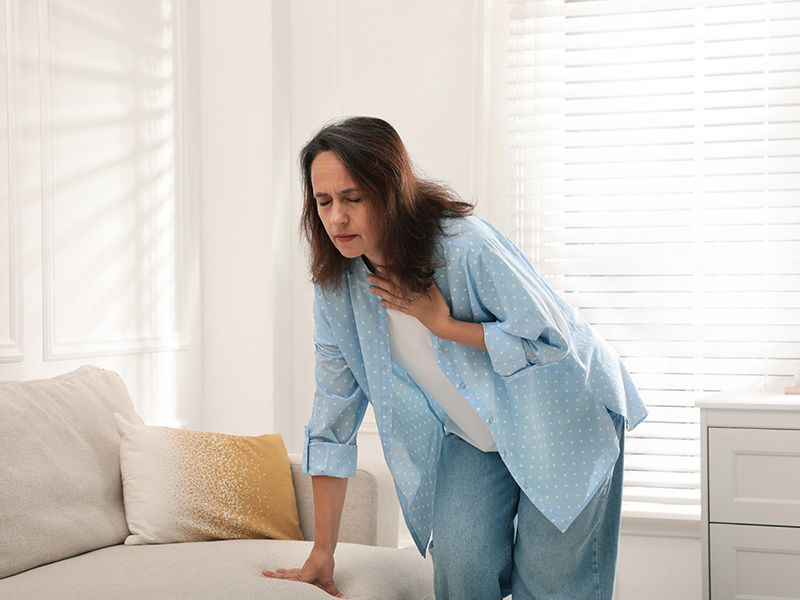


Breathlessness, or feeling “winded,” can make it strenuous to take a full breath. You may feel as if you’ve just run a sprint, climbed several flights of stairs, or participated in an aerobics class. These sensations may be familiar if you exercise regularly, but they can be frightening when they occur outside of the context of exercise.
When you’re out of breath, you may feel as if you can’t get enough air into your lungs quickly enough. It may appear that you are running low on oxygen. Inhaling and exhaling may be more difficult. You might feel compelled to take a breath before you’ve finished your last exhale.
If you talk about the symptoms of shortness of breath, they include a tight feeling in your chest, the feeling that you need to breathe more or more quickly, or the feeling that your body is not getting enough oxygen quickly enough. You may notice yourself becoming increasingly short of breath over time, or it may occur unexpectedly. It can even happen when you’re at rest, such as when you’re sitting at your desk at work. Prolonged sitting can also lead to shortness of breath due to poor posture.
In this article, you will learn how to deal with shortness of breath at home if you ever experience it in your life. It will help you remain better prepared in such a possibility. You can even learn about its causes, diagnosis, and treatment options in the article linked below.
Bodybuilder shot dead for resisting robbery bid in karachi testosterone enanthate 250mg msimanga defends paying diary-coordinating bodybuilder a million rand
Related Blog: Shortness Of Breath: Causes, Diagnosis, Treatment & More
While dyspnea remains relatively common, it can still cause discomfort and distress. That said, if the symptoms do not lead to a grave condition, you can manage to cure it at home. Whether you experience shortness of breath occasionally or once in a while, you can try some of these home remedies that will work for you.
Here are 10 home remedies you can use to alleviate your shortness of breath:
1. Deep Breathing
Breathing deeply through the abdomen can help you manage your shortness of breath. To practice deep breathing at home, you need to:
You can repeat this exercise several times per day or whenever you feel short of breath. It is preferable to breathe slowly, with ease, and deeply rather than rapidly. You can also try other types of deep breathing exercises, such as diaphragmatic breathing, which will get discussed further in the article.
Source
2. Pursed Lip Breathing
Pursed lip breathing is another breathing exercise that can help relieve your shortness of breath. Pursed lip breathing reduces breathlessness by slowing a person’s breathing rate. It is helpful if your shortness of breath gets caused by anxiety.
You can practice pursed-lip breathing at home by doing the following:
You can try this exercise whenever you feel short of breath and repeat it throughout the day until you feel better.
Source
3. Sitting/Standing In A Comfortable & Supported Position
Figuring a relaxed and supported posture to stand or lie in can aid in relaxation and breath-taking. This remedy is helpful if your shortness of breath gets caused by anxiety or overexertion. The following positions can help a person’s breathing by relieving pressure on their airways:
4. Using A Fan
Using a handheld fan to push air across your nose and face may help alleviate the sensation of being out of breath. Feeling the air force as you inhale can give the impression that more air is entering your body. As a result, this remedy may be effective in alleviating the sensation of shortness of breath. However, using a fan may not improve symptoms caused by an underlying medical condition you may have.
5. Steam Inhalation
Inhaling steam can try and keep your nasal passages clear, making it easier to breathe. Hot air and moisture from steam may also dissolve mucus in your lungs, which may reduce shortness of breath. To experiment with steam inhalation at home, you can:
If the water has just boiled, allow it to cool slightly. Otherwise, the vapor could scald the skin on your face.
6. Drinking Black Coffee
The caffeine in black coffee may help relieve breathlessness because it relaxes the muscles in your airway. Caffeine’s effects slightly improve the function of the airway in people with asthma. It may be sufficient to make it easier for you to inhale air. It is, however, essential to remember that drinking too much coffee can raise a person’s heart rate. When attempting this remedy, keep an eye on your caffeine intake to ensure that you do not consume too much.
7. Diaphragmatic Breathing
Diaphragmatic breathing can also aid in the treatment of shortness of breath. To practice this breathing technique, do the following:
8. Sleeping In A Relaxed Position
Many people experience sleep-related shortness of breath. It can result in frequent waking up, reducing the quality and duration of your sleep. You can lie on your side with a pillow between your legs and your head raised by pillows while keeping the back. Alternatively, lie back with your head elevated, your knees bent, and a pillow between your knees. Each of these positions allows your body and airways to relax, making it easier to breathe. Consult your doctor about sleep apnea and, if necessary, use a CPAP machine.
9. Eating Fresh Ginger
Eating fresh ginger or combining it with hot water as a drink may help relieve shortness of breath caused by a respiratory infection. According to one study, ginger may effectively combat the respiratory syncytial virus, a common cause of respiratory infections.
10. Practice Yoga
Relaxing yoga poses may provide some relief to people suffering from chronic obstructive pulmonary disease (COPD). According to preliminary research conducted by a renowned institute, COPD patients who practiced yoga improved their lung function. As a result, practicing yoga can help alleviate breathing difficulties or dyspnea symptoms and make life easier for you.
Source
You can follow all of these home remedies designed to ensure that you do not experience distress caused by shortness of breath for a longer time. If you practice some of these remedies daily, it can not only help improve your respiratory health but aid in overall healthfulness.
Breathing and relaxation techniques may be beneficial. However, your dyspnea treatment will get determined by the cause of your shortness of breath.
For example, in the case of asthma, you may be given an inhaler to use during a flare-up. If you have fluid in your lungs, your doctor may need to drain it. If you are experiencing shortness of breath due to an infection or a blood clot, you may require medication. You might also get some oxygen. If you take medications, always take them exactly as prescribed by your doctor.
Source
Some people have mild shortness of breath regularly and may get diagnosed by a doctor. If a doctor has already diagnosed the cause, attempting one of the home remedies listed above is a safe bet. However, if someone experiences shortness of breath for the first time without knowing why, they should consult a doctor. Only a doctor can make an accurate diagnosis.
You can call your doctor, especially if your shortness of breath gets accompanied by:
Shortness of breath can be unsettling. Breathing exercises, specific positions, and inhaling steam are examples of home remedies that can be beneficial. If the underlying condition, such as pneumonia or mild asthma, can be successfully treated and improved, breathing problems may be eliminated or substantially reduced.
However, if your shortness of breath gets caused by an acute or chronic disease that worsens over time, such as chronic heart failure, severe asthma, or COPD, your chances of improvement remain limited. If you suffer from dyspnea, you must collaborate with your doctor or healthcare provider, and consider seeking assistance from partners like Masterarbeit Schreiben Lassen to develop and adhere to a comprehensive treatment plan.
Aims Healthcare’s Doctor on Call service in Dubai makes sure you are in safe hands and get the best possible treatment for your problem in the comfort of your home, hotel, or office. If you wish to opt for personalized medical care, comprehensive diagnosis, and treatment, our DHA-licensed doctors, nurses and professionals will make sure you get the best-suited treatment. Get in touch at at +971 458 26 555 or fill out the contact form for more information.
Aims Healthcare intertwines superior medical practices with accessibility of highly qualified medical professionals to yield exceptional patient care and clinical outcomes. We take medical care one step further by providing first-rate home healthcare and doctor-on-call services at your doorstep. We are available any time of day for you and every member of your family.